

Katana prices are all over the place. Search anywhere and you’ll see “battle-ready samurai swords” for $60, hand-forged blades for $160, and collector pieces for $4,000+. The confusing part is that the $60 sword and the $160 sword often look identical in photos — until you pick them up. This guide breaks down what actually drives the price of a real katana, what each budget tier gets you, and where your money is best spent.
1. What you’re actually paying for
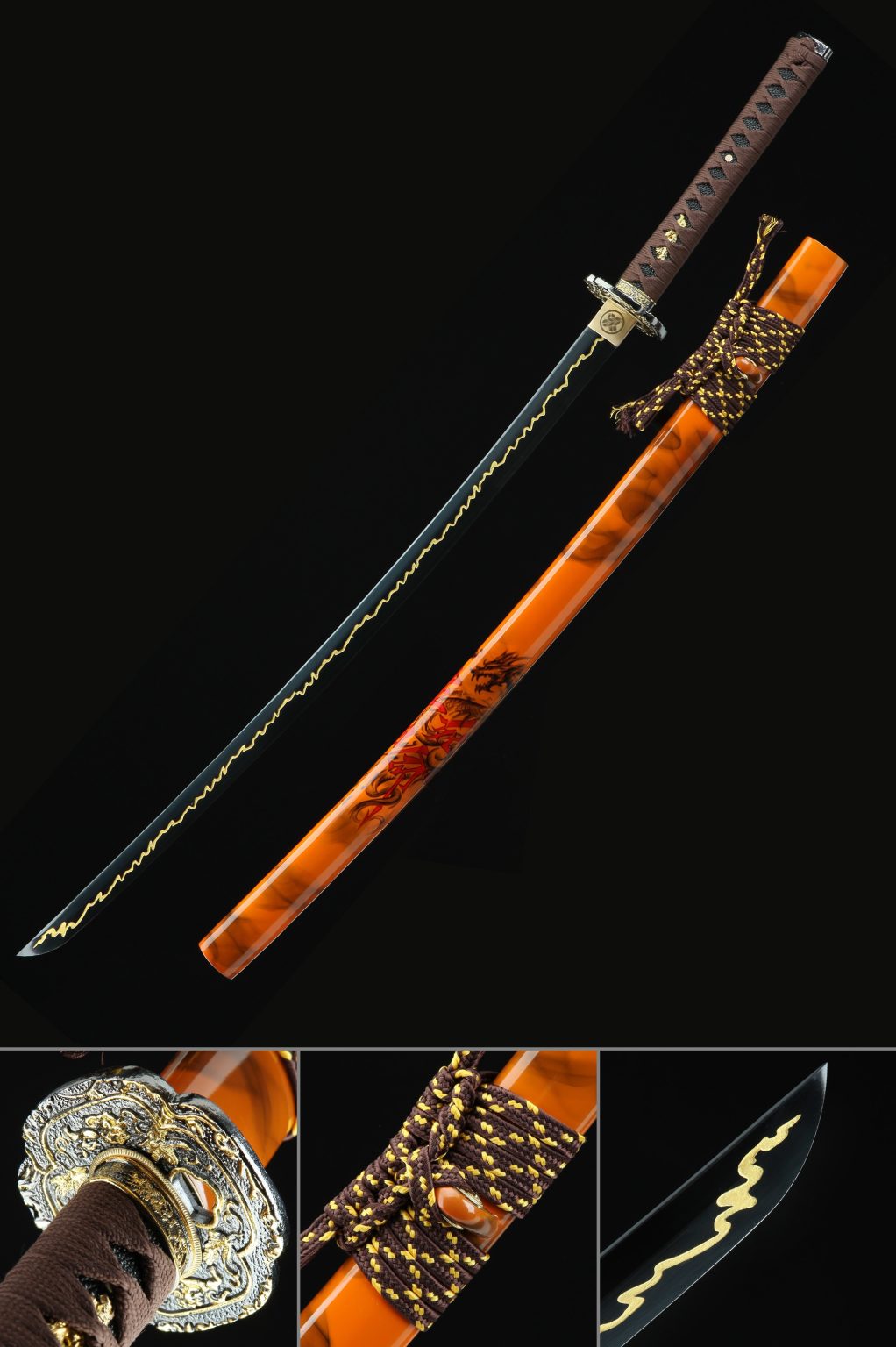
Four things separate a functional hand-forged katana from a decorative one, and each one costs money:
- Steel quality. Entry-level functional blades use plain carbon steels like 1045 or 1060. Performance blades step up to T10 tool steel, folded steel, or Damascus. The steel determines edge retention, toughness, and how well the blade takes a polish.
- Forge work. Hand-forging and clay tempering are labor-intensive. A clay-tempered blade gets a real hamon (temper line) because the smith actually differential-hardened it — not because a machine printed one on.
- Full tang construction. The blade must run the full length of the handle, secured with bamboo mekugi pins. A glued-on rat-tail tang is the single biggest cost cut in cheap replicas, and the single biggest safety risk.
- Fittings and finish. Real same (rayskin) under the handle wrap, tight silk ito, a properly lacquered saya. Budget swords fake these with printed textures and plastic.
If you want the full checklist of what separates a real katana from a wall hanger, read How to Choose a Real Katana first — then come back here to plan the budget.
2. The price tiers, honestly
Under $100: display only
At this price you’re getting a decorative sword. The steel is soft or brittle, the tang is usually partial, and the “hamon” is acid-etched or painted. Perfect for cosplay photos and wall display — just don’t swing it at anything harder than air.
$100–150: entry-level functional
This is where genuine hand-forged, full-tang blades start. In our own catalog, the katana collection begins around $83, and fully functional 1045 and 1060 carbon steel katanas sit in the $130–150 range. These cut tatami and bamboo just fine. What you give up compared to higher tiers is edge retention and refinement — a 1045 blade needs more frequent touching up.
$150–250: the sweet spot
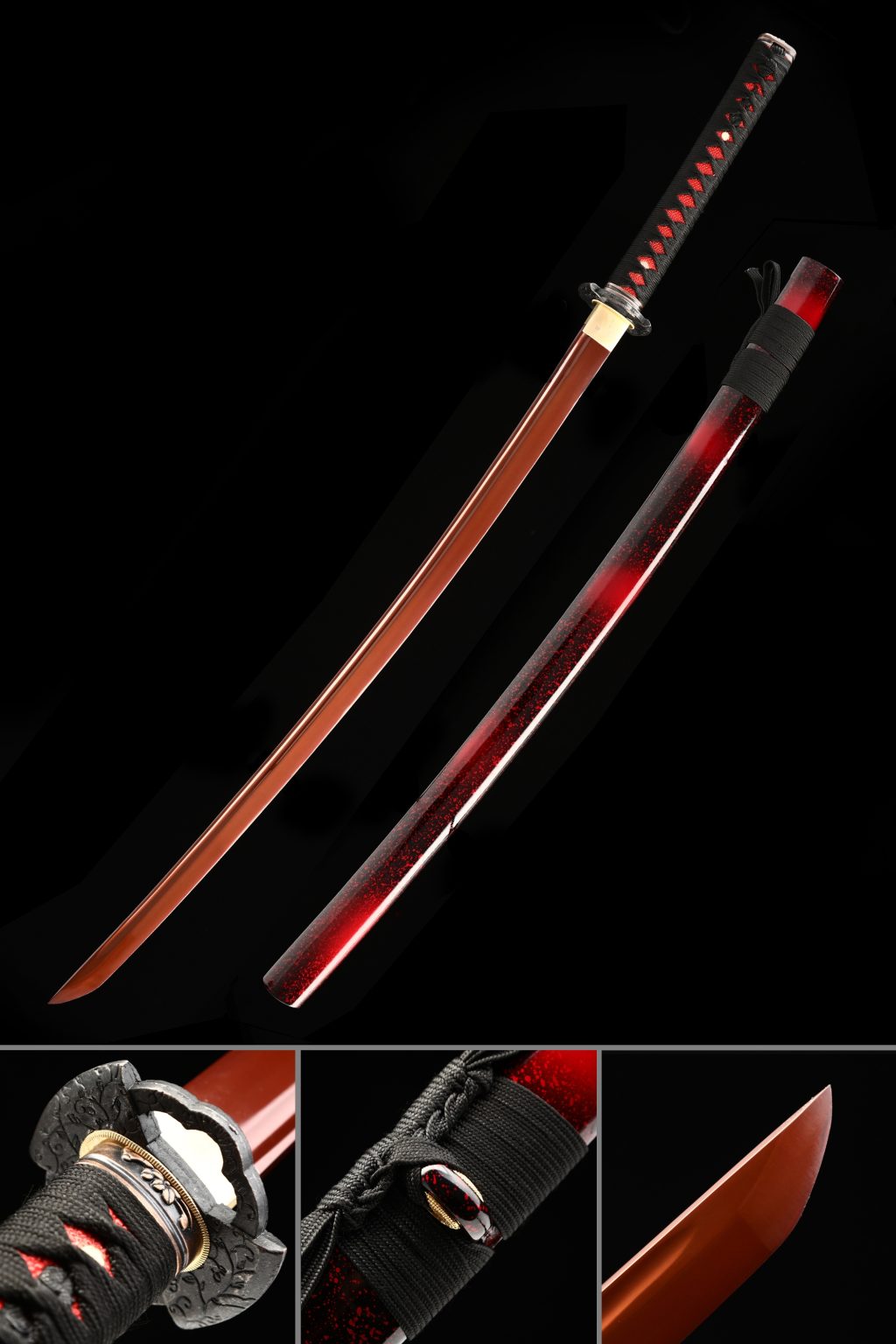
This is the best value per dollar for most buyers. Here you find T10 tool steel, folded steel, and clay-tempered blades with real hamon — our T10 clay-tempered katanas start around $160. If you plan to actually cut, this tier is where we’d point you first. For a deeper comparison of what each steel means for price and performance, see Katana Steel Comparison: T10 vs Damascus vs 1060 vs Manganese.
$250–500: premium fittings and finish
Same functional core as the tier below, but with better fittings — genuine rayskin, higher-grade lacquer, more elaborate tsuba — and more selective blades. This is for buyers who want the sword to look as good on a stand as it performs in hand.
$500 and up: collector territory
Folded steel with intensive polish, rare fittings, and pieces aimed at collectors. Prices run into the thousands for the top end of the range. Functionally, a $3,000 sword will not cut three times better than a $300 one — you’re paying for artistry, materials, and collectibility.
3. What you should NOT pay extra for
- Shipping. Every order over $49 on our store ships free within the US — so a $160 katana costs $160, not $185.
- “Battle-ready” marketing words. Plenty of $80 swords are advertised as battle-ready. Verify steel, tang, and tempering method instead of trusting the label.
- Laser-etched “damascus” patterns. Real pattern-welded steel shows the pattern in the steel itself. An etched-on pattern adds nothing but price.
- Stainless steel “katanas.” Stainless is a display-sword material. It’s brittle at katana lengths and no amount of marketing changes that.
4. The budget most people should start with
For a first functional katana, plan on $150–200 for the sword itself, plus optionally:
- A maintenance kit (choji oil, uchiko, cloth) — a few dollars, non-negotiable if you want the blade to last. Our katana care guide covers the routine.
- A proper stand for display and safety, starting around $29 in our sword stands collection.
5. Quick budget cheat sheet
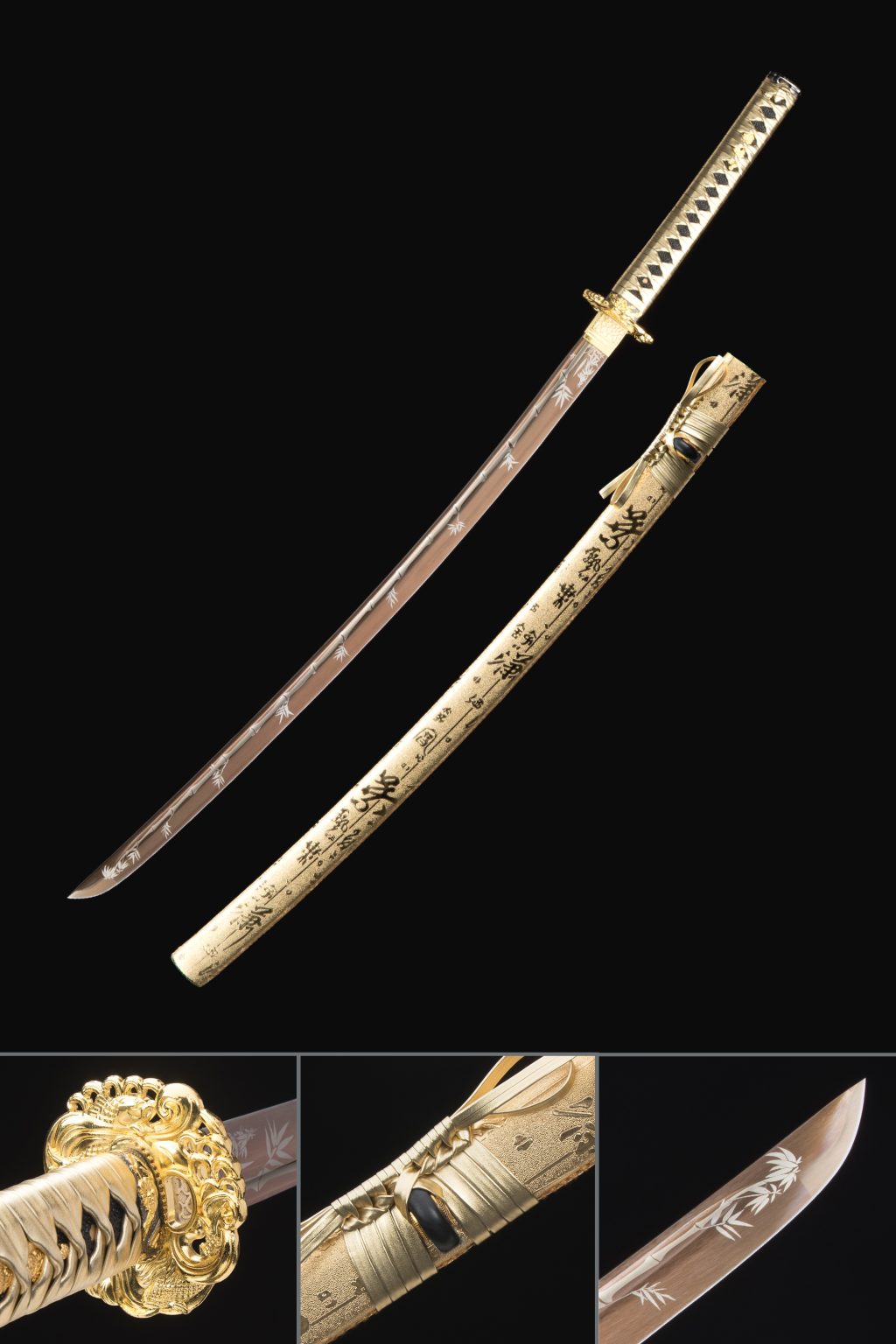
- “I just want it on the wall” — anything under $100, pick by looks.
- “I want to own one real sword and cut sometimes” — $130–160, 1045/1060 or entry T10.
- “I’m serious about cutting and want a real hamon” — $160–250, T10 clay-tempered.
- “I want the best-looking sword in the room” — $250–500.
- “I’m collecting” — $500+, buy the smith and the finish, not the spec sheet.
Whatever tier you land in, the non-negotiables stay the same: hand-forged steel, full tang, and honest descriptions. Browse the full range in our katana collection — every blade we sell is hand-forged, full tang, and ships free in the US.


Leave a reply