

The hamon — that misty temper line running along the edge of a Japanese sword — is the most faked feature in the industry. Browse any marketplace and you’ll see dozens of “katanas with hamon” that never went through differential hardening at all. The pattern was printed, etched, or painted on, and in photos the difference isn’t always obvious. In person, it is. Here’s how to tell a real hamon from a fake one before you spend your money.
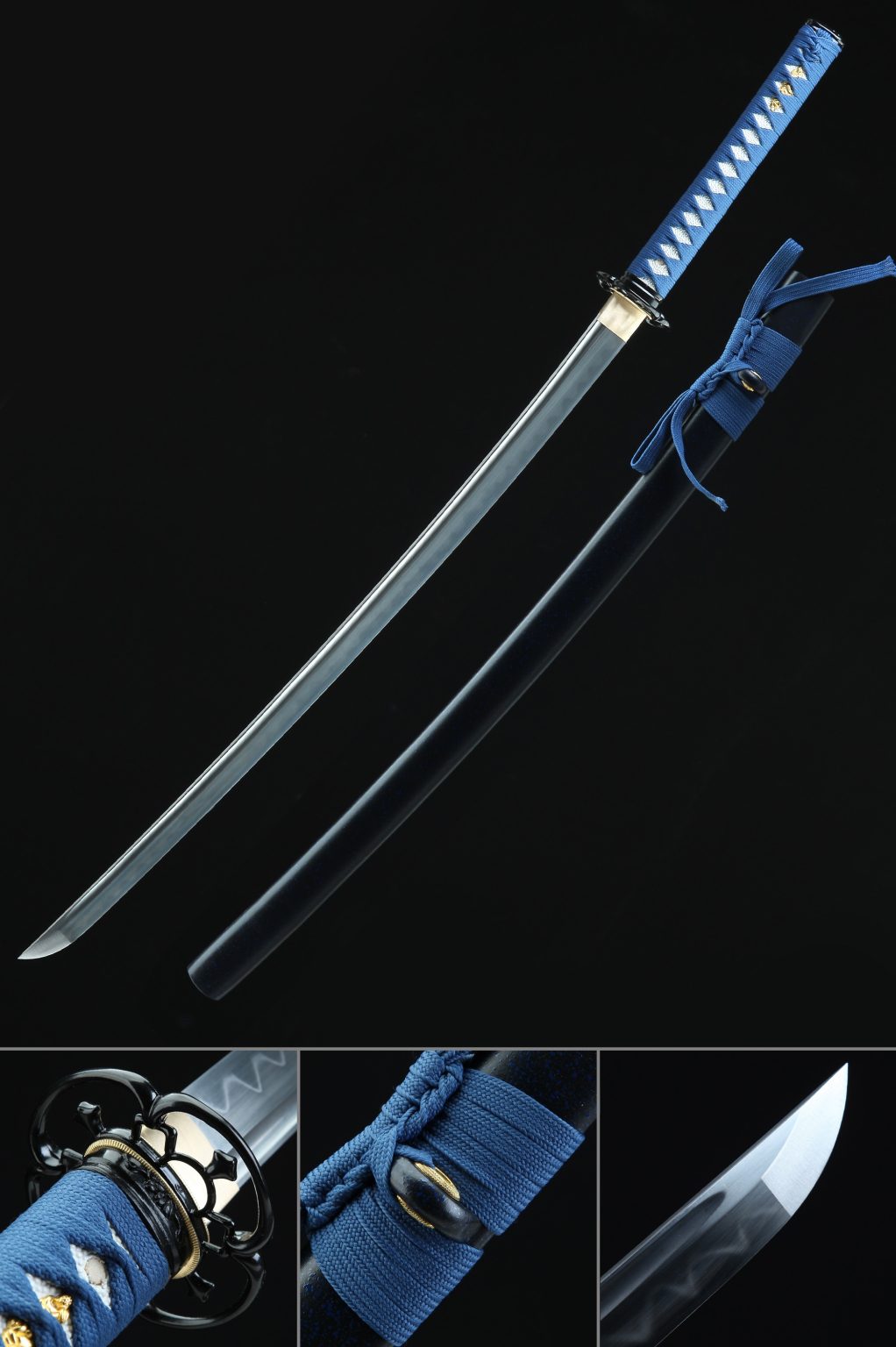
1. What a hamon actually is
A real hamon is not a pattern — it’s a visible record of differential hardening. During clay tempering, the smith coats the blade’s spine with a thick layer of insulating clay and leaves the edge nearly bare. When the blade is heated and quenched, the thin edge cools fast enough to crystallize into hard martensite, while the clay-wrapped spine cools slowly and stays tough and slightly soft. The hamon is the boundary between those two structures.
This is why a real hamon matters functionally: you get a hard edge that holds a razor polish and a resilient spine that absorbs shock. It’s the core engineering of a Japanese sword — covered in more depth in How to Choose a Real Katana and Katana Steel Comparison.
2. Why fakes are everywhere
Because clay tempering costs money. It’s a skilled, per-blade process with a failure rate. Acid etching costs pennies: dip the blade, and the acid bites a wavy band into the steel that photographs like a hamon to anyone who hasn’t held the real thing. Since most buyers shop from photos, the fake works often enough to be worth doing.
3. Five ways to spot the difference
Test 1: Tilt it in the light
A real hamon is a change in the steel’s crystal structure, so it appears and shifts as you tilt the blade under a light source — sometimes crisp, sometimes hazy, with the boundary wandering. An etched hamon looks the same from every angle, like a printed stripe. This is the single most reliable test.
Test 2: Look for “activity” inside the line
Along a genuine hamon, close inspection reveals fine internal details — tiny glittering crystals (nie), misty patches (nioi), short lines reaching back toward the spine (ashi), and dark dots (yo). Collectors call this activity, and it comes from the physics of the quench, not from a chemical bath. An acid-etched band is flat and textureless inside, like a sticker.
Test 3: Check the start of the line
On a real blade, the hamon begins crisply at the hamachi — the notch where the tempered cutting edge starts — and follows the edge with natural, irregular variation all the way to the tip. Fakes often start abruptly in the middle of nowhere, run with mechanical regularity, or wrap around the whole blade including the spine.
Test 4: Compare pattern versus price
An elaborate choji (clove-shaped) hamon on a $90 sword is a contradiction. Complex hamon patterns come from master-level heat control and appear on blades priced accordingly. On budget and mid-range swords, expect honest, simpler patterns — the straight suguha or modest gunome you’ll see on our T10 clay-tempered katanas is exactly what a working clay-tempered blade should show.
Test 5: Feel the geometry
Run a fingernail (or better, have a professional inspect) near the boundary of the line. A real hamon sits in the steel’s structure — the polished surface stays even. Heavy acid etching often leaves a faintly raised or pitted band you can feel, because the acid attacked the surface unevenly.
4. The classic hamon patterns
- Suguha — straight and even along the edge. The workhorse pattern of practical swords; clean and honest.
- Gunome — repeating half-round waves. Common on well-made production blades.
- Notare — long, gentle undulations, like a calm shoreline.
- Choji — clove-shaped scallops with ashi activity. The showpiece pattern of high-end blades.
5. Does a fake hamon mean a bad sword?
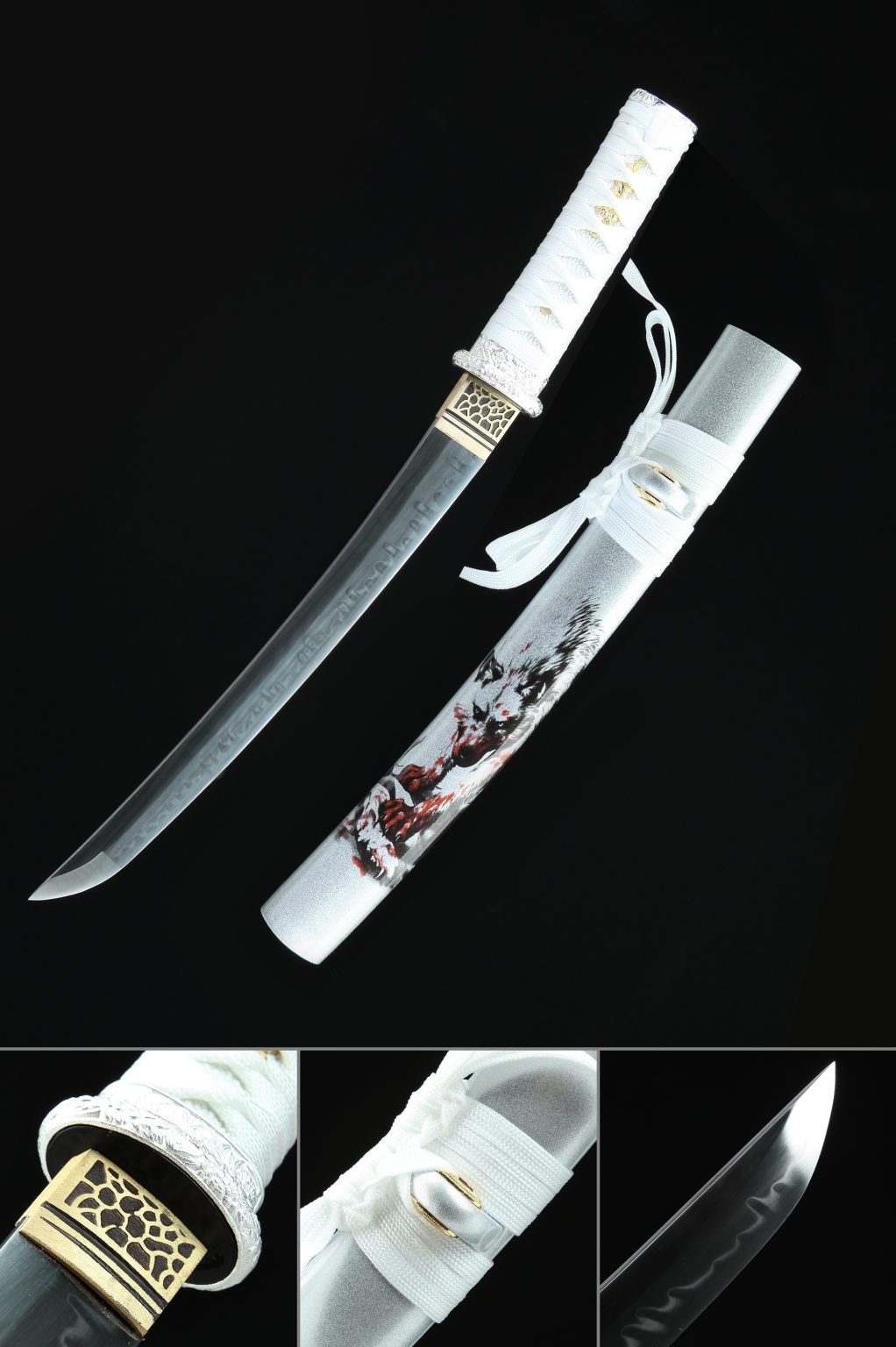
Not necessarily — but it means an honest one was never the goal. A sword with an etched hamon was not differentially hardened, so its edge and spine are the same steel with the same treatment. It can still be functional if the steel and tang are right (see our anatomy and tang breakdowns in the buying guide). What you should never accept is paying clay-tempered money for acid-etched steel.
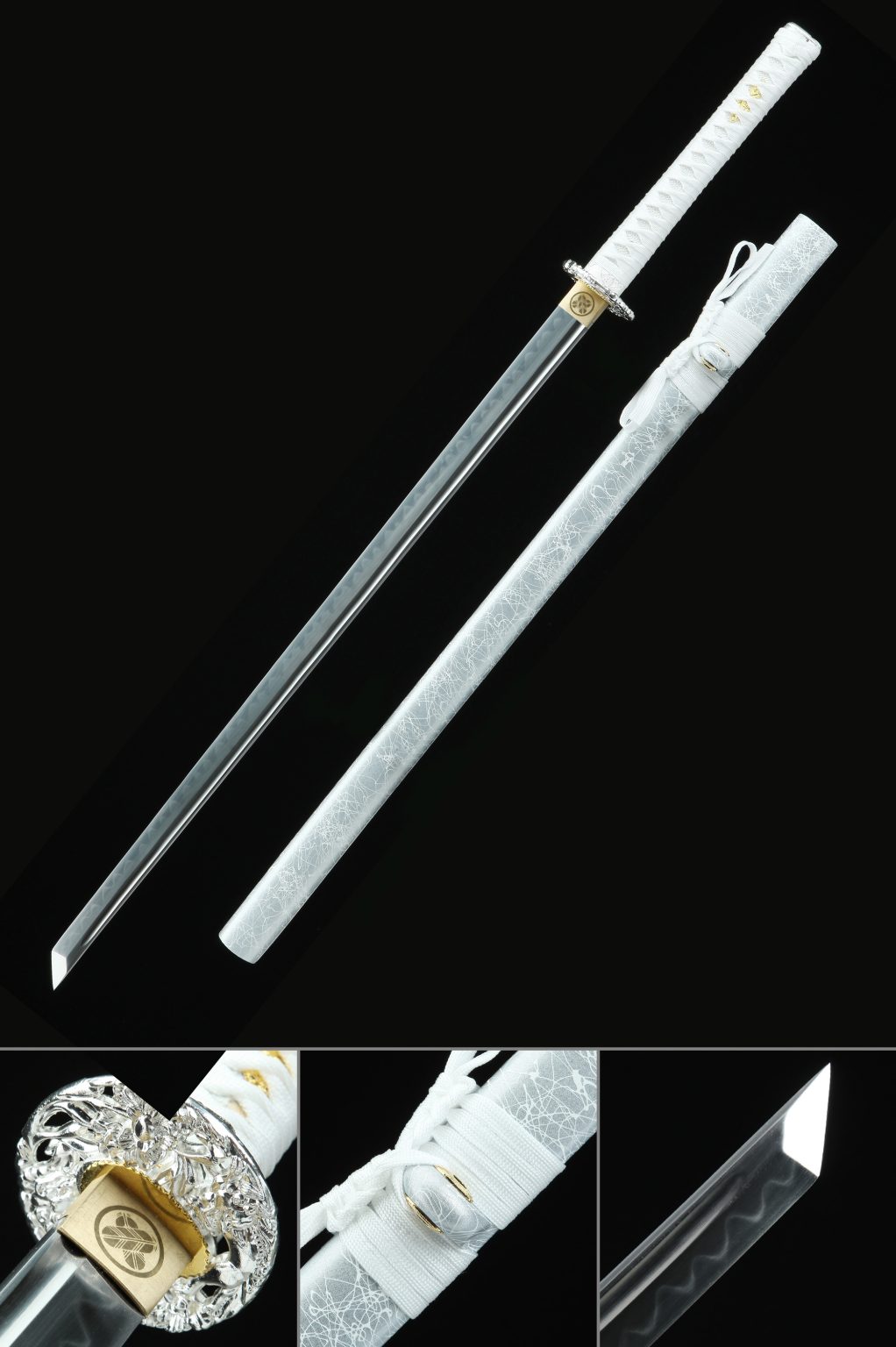
Every clay-tempered blade in our T10 steel katana collection gets its hamon from actual differential hardening — hand-forged, full tang, and honestly described. If you’re comparing options across stores, run the five tests above first. The light test alone will filter out most of the fakes.


Leave a reply